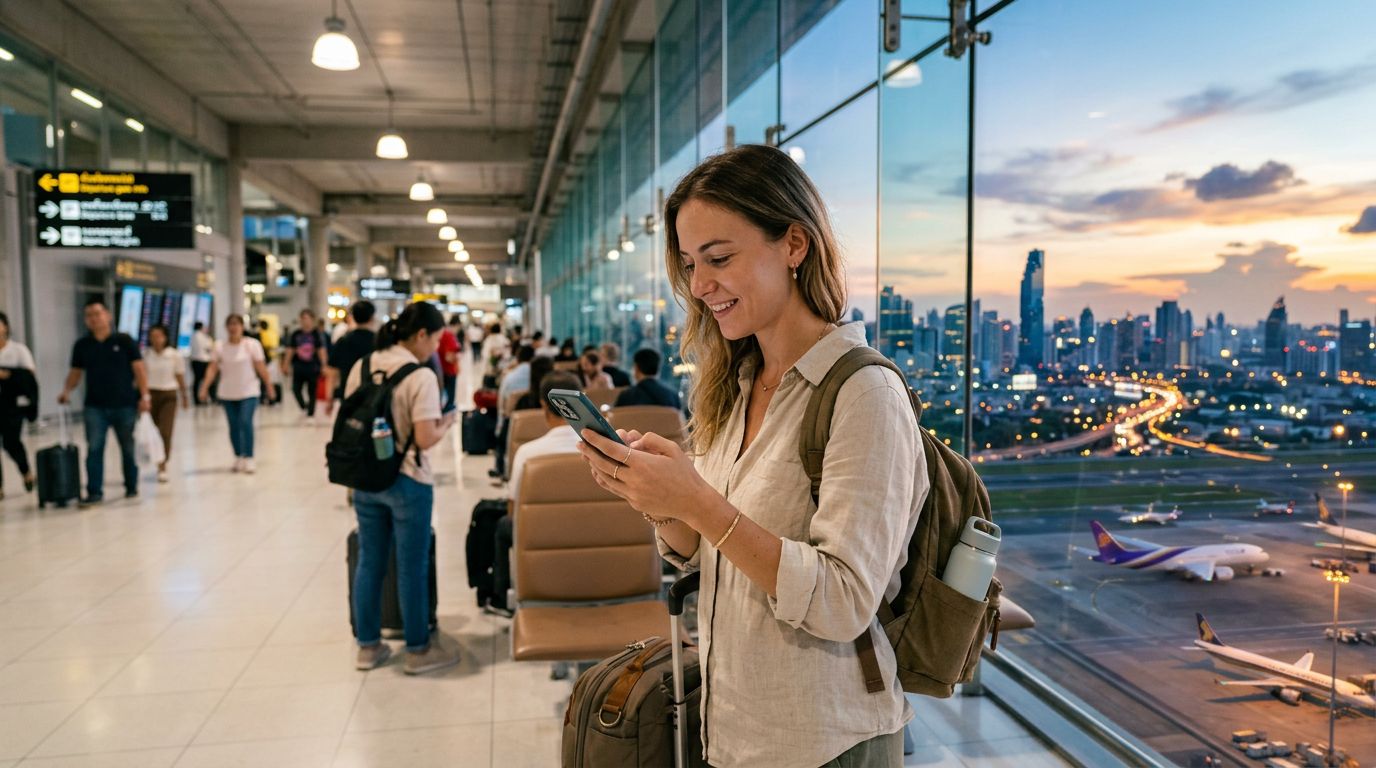
If you have ever traveled internationally, you have likely seen the term "data roaming" pop up in your phone’s settings or received an ominous text message from your carrier as soon as your plane touched down. For many, the term is synonymous with high costs and connectivity anxiety. But what exactly is it, and how can you manage it without breaking the bank?
What Is Data Roaming?
At its simplest, data roaming is the ability for your mobile device to connect to a cellular network other than your home provider’s network.
When you are at home, your phone connects to the towers owned or leased by your mobile carrier. When you travel abroad, those towers aren't available. Instead, your phone "roams" by borrowing the signal from a local network in the country you are visiting. This allows you to continue using your data, sending messages, and browsing the web while you are away from home.
While this sounds convenient, it comes with a catch: your home carrier has to pay the foreign network for access to their infrastructure. They then pass that cost—often with a significant markup—on to you. This is why "roaming charges" are notorious for appearing as unexpected, hefty fees on your monthly billing statement.
How Does Roaming Work?
When you arrive in a new country, your phone performs a "handshake" with local towers. If your carrier has a roaming agreement with a local provider, your phone will automatically switch to that network.
There are two main types of roaming: Voice Roaming: This allows you to make and receive calls. Data Roaming: This allows you to use the internet, check emails, use GPS, and access social media.
Most modern smartphones have a "Data Roaming" toggle in their settings. If this is turned on, your phone will seek out data connections the moment you land, often triggering background updates, app syncs, and email fetches that can consume your data allowance—or worse, incur "pay-as-you-go" roaming rates—before you have even left the airport.
The Hidden Costs of Traditional Roaming
The primary danger of data roaming is that it is often expensive and unpredictable. Depending on your home carrier, roaming can cost several dollars per megabyte. If you aren't careful, a few hours of scrolling through maps or posting photos to social media can lead to a bill that costs more than your flight.
Many carriers offer "daily travel passes," which provide a flat fee for a set amount of data. While these are better than pay-as-you-go rates, they can still add up quickly if you are traveling for more than a few days. Furthermore, these plans are often restrictive, limiting your speed or the amount of high-speed data you can use per day.
A Smarter Alternative: The Travel eSIM
In recent years, the technology behind mobile connectivity has evolved. The most significant advancement for frequent travelers is the eSIM (embedded SIM).
An eSIM is a digital version of the physical SIM card you are used to. It allows you to download a mobile plan directly to your device without needing to swap out a tiny plastic card. This is where services like OneTapSIM become a game-changer for international travelers.
By using a service like OneTapSIM, you can purchase a data plan specifically for the country or region you are visiting. Because you are essentially buying a local data package, you bypass the expensive roaming fees charged by your home carrier.
Why Use an eSIM Instead of Traditional Roaming?
Switching to an eSIM for your travels offers several distinct advantages:
- Cost Efficiency: You pay for the data you need upfront. There are no hidden fees, no surprise bill shocks, and no complex roaming agreements to navigate.
- Convenience: You can install your OneTapSIM plan before you even leave your house. Once you land, you simply toggle on your eSIM data, and you are connected immediately.
- Keep Your Number: With an eSIM, you can often keep your primary SIM card active for calls or SMS (if you choose), while using your eSIM exclusively for high-speed data. This ensures you stay reachable on your home number while keeping your internet costs low.
- Flexibility: Whether you are traveling for a weekend or a month, you can choose a plan that fits your specific duration and data needs.
How to Stay Connected Without the Stress
If you want to avoid the "what is data roaming" headache entirely, follow these best practices:
- Check Your Settings: Before you fly, go to your phone’s cellular settings. If you don’t have an international plan, ensure "Data Roaming" is turned OFF for your primary SIM card.
- Download Your eSIM Ahead of Time: Services like OneTapSIM allow you to set up your profile before you depart. This ensures that as soon as you land, you have a local connection ready to go.
- Use Wi-Fi When Possible: Even with a data plan, it is good practice to use hotel or café Wi-Fi for heavy tasks like downloading large files or streaming movies.
- Monitor Your Usage: Keep an eye on your data consumption through your phone’s settings menu to ensure you aren't burning through your allowance unnecessarily.
Final Thoughts
Understanding what data roaming is—and realizing that you don't have to rely on it—is the first step toward a more stress-free travel experience. You no longer have to fear your phone bill or worry about being disconnected in a foreign city.
By leveraging modern technology like an eSIM from OneTapSIM, you can enjoy the same connectivity you have at home at a fraction of the cost. Whether you are navigating a new city with Google Maps, translating menus on the fly, or sharing your favorite travel moments with friends back home, having a reliable, affordable data connection is the ultimate travel essential. Safe travels!