Why Connectivity Matters in Cameroon
Cameroon is a nation of incredible diversity, ranging from the bustling markets of Douala and the administrative hubs of Yaoundé to the lush rainforests and volcanic peaks of Mount Cameroon. Whether you are visiting for business, exploring the coastal beauty of Kribi, or embarking on a safari in Waza National Park, having a reliable internet connection is essential. Without data, you might find yourself struggling to translate local languages, unable to pull up maps in remote areas, or disconnected from the ride-sharing apps that make getting around major cities much easier.
Many travelers arrive in Cameroon assuming they can simply rely on hotel Wi-Fi or public hotspots. However, infrastructure in many regions remains inconsistent. Public Wi-Fi is rarely secure, and relying on it can leave your personal information vulnerable. Furthermore, finding a stable connection in rural areas or during transit between cities is often impossible. For the modern traveler, having a dedicated mobile data plan is the most effective way to ensure safety, convenience, and constant access to the information you need.
Traditional Options vs. The Digital Advantage
Historically, the standard approach for international travelers arriving in Cameroon was to visit a local mobile network provider’s kiosk at the airport or in the city center. This process involves finding a physical store, waiting in line, presenting your passport for registration, and swapping out your home SIM card for a local one. While this method works, it comes with significant drawbacks. Physical SIM cards are small, fragile, and easy to lose. If you misplace your original SIM card during the swap, you could lose access to your home number, which is often tied to your banking apps and two-factor authentication services.
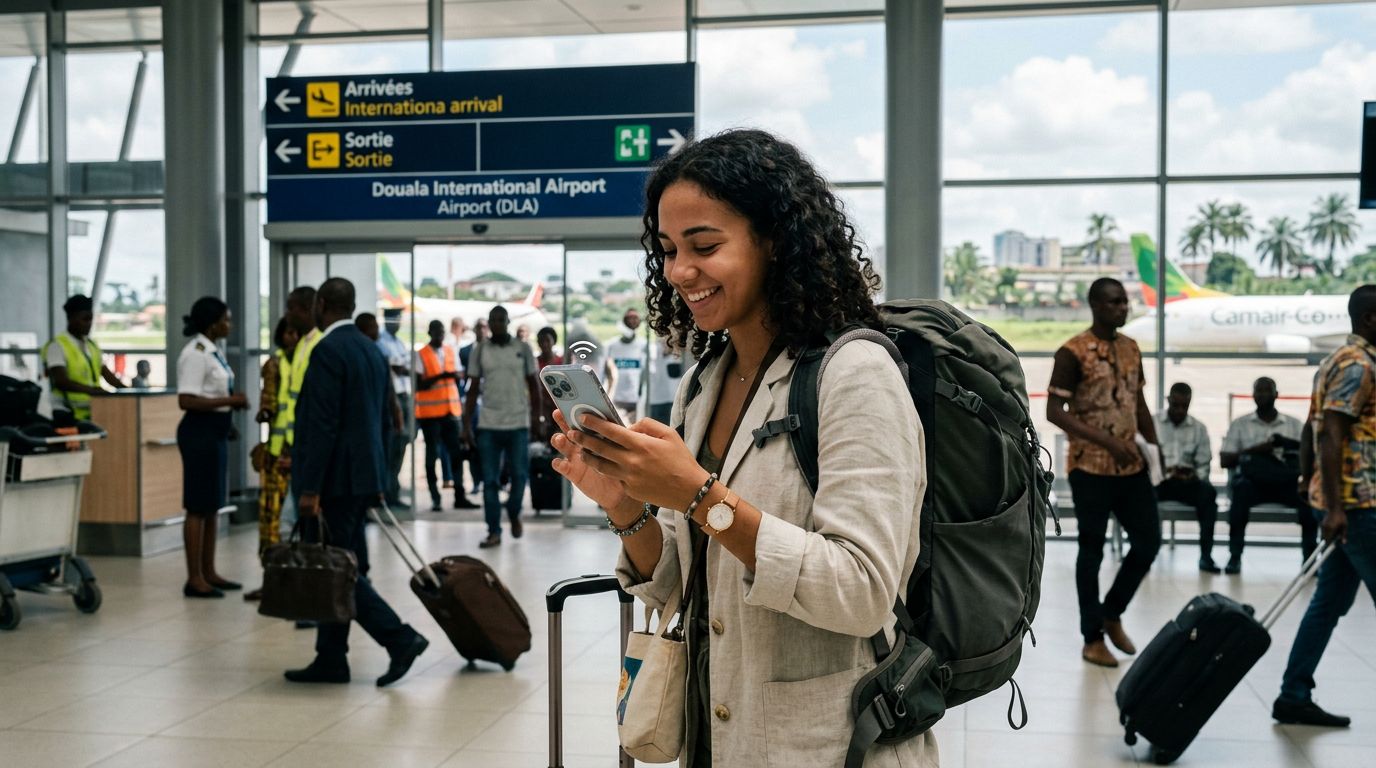
This is where the eSIM technology changes the game. An eSIM is a digital version of a physical SIM card that is embedded directly into your smartphone’s hardware. Because it is software-based, you do not need to visit a store or handle tiny plastic cards. You can set up your connection before your plane even touches down in Douala or Yaoundé. By choosing an eSIM, you keep your home SIM card active in your phone, allowing you to receive important calls or texts from home while simultaneously using a local data plan for your internet needs.
For those wondering about the best way to get data in Cameroon, the shift toward eSIMs is the most logical step. It removes the language barrier often encountered at local kiosks and eliminates the risk of hardware damage. With a service like OneTapSIM, the process is streamlined to ensure you are connected the moment you arrive, allowing you to focus on your itinerary rather than administrative tasks.
Getting Started with Your eSIM
The transition to an eSIM-only travel lifestyle is straightforward, provided your device is compatible. Most smartphones released in the last few years support eSIM technology. You can verify your device’s capabilities by checking the settings menu on your phone or by consulting the manufacturer’s support documentation. If your phone is unlocked and supports eSIMs, you are ready to proceed.
To get started, you select a data package that suits the duration of your stay. Once you purchase your plan through a provider like OneTapSIM, you will receive a QR code or a set of activation instructions via email. You simply scan the code within your phone’s settings to install the digital profile. The setup takes mere minutes and requires nothing more than a stable internet connection at the time of installation.
Once the eSIM is installed, it remains dormant until you land in Cameroon. As soon as you arrive, you can toggle the eSIM to "on" in your cellular settings, and your phone will automatically connect to the local partner network. This seamless transition is why many frequent travelers consider this the best way to get data in Cameroon. You skip the queues, you avoid the hassle of carrying multiple SIM cards, and you maintain complete control over your data usage.
Tips for Managing Data While Traveling
Even with a reliable data plan, it is wise to manage your usage to ensure you have enough connectivity for the duration of your trip. Cameroon offers a variety of landscapes, and while major cities have strong network coverage, data speeds can vary significantly once you head into the interior or toward the northern regions.
First, adjust your smartphone settings to restrict background data for non-essential apps. Many applications, such as social media platforms and cloud storage services, sync data in the background, which can consume your data allowance without you realizing it. By disabling background app refresh, you ensure your data is dedicated to the tools you actually need, such as navigation apps, translation software, and communication tools.
Second, download offline maps and local language packs before you leave. While your eSIM will provide data, having a backup map of the city you are visiting ensures you can still find your way around if you happen to enter a temporary dead zone. Similarly, if you are planning to use ride-sharing services or local booking apps, keep them updated and logged in before you depart for your trip.
Lastly, remember that your eSIM is primarily for data. If you need to make traditional voice calls, you can use messaging apps that rely on your data connection. This is often the most cost-effective and reliable way to stay in touch with family or colleagues back home. By combining the convenience of a OneTapSIM eSIM with smart data management, you can enjoy a stress-free trip through Cameroon, knowing you are always connected to the digital resources that make modern travel possible. Whether you are navigating the vibrant streets of the capital or relaxing on the coast, having the right data solution ensures your experience remains smooth and uninterrupted.
Get an eSIM for
Plans for the destinations covered in this guide, with instant QR delivery.